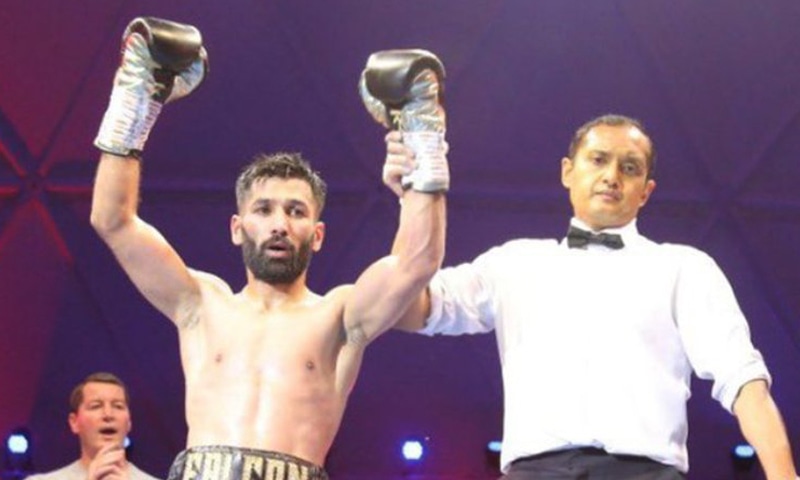
Muhammad Waseem grew up in Quetta, a city more associated with Balochistan’s rugged terrain than with professional boxing. He belongs to the Alizai tribe of Pashtuns, with roots in the district of Mastung, and speaks Pashto, Urdu, Balochi, and Persian. None of that background pointed toward a career in the ring. What stood out there was talent, an amateur record of 89 wins and 16 losses accumulated over nearly a decade of national and international competition, and a willingness to train in Seoul, Tokyo, Las Vegas, Kazakhstan, and Liverpool when Pakistan’s own infrastructure couldn’t give him what he needed.
As of late 2025, Waseem holds a professional record of 15 wins and 2 losses, with 10 knockouts, and carries the WBA Gold bantamweight title — the first major world championship won by any Pakistani professional boxer in history. That last distinction is worth dwelling on. Pakistan has been producing competitive boxers since the 1970s. It took until 2025 for one of them to bring home a world title.
The Amateur Foundation
Waseem turned professional in June 2015, but the years before that built the platform. His amateur career included a silver medal at the 2010 South Asian Games in Dhaka, a bronze medal at the 2010 Commonwealth Games in New Delhi, another bronze medal at the 2014 Asian Games, and a silver medal at the 2014 Commonwealth Games in Glasgow, where he was the only Pakistani boxer to reach a final. He won gold at the 2010 World Combat Games in Beijing. His record across national competitions was undefeated for more than seven years.
Despite that resume, the Pakistan Boxing Federation denied him a nomination to the World Series Boxing program on multiple occasions between 2010 and 2015, a decision he described as deeply disappointing. He wanted exposure against the world’s best during his peak amateur years. The federation’s choices meant he didn’t get it.
Building a Professional Record
Waseem made his professional debut in South Korea under Korean promoter Andy Kim, knocking down Min Wook Lee in the ninth round to claim the vacant South Korea bantamweight title. He trained in Japan, then in Las Vegas at Floyd Mayweather’s Money Team gym under Jeff Mayweather. The willingness to travel and train in environments his domestic setup couldn’t replicate became a defining feature of his career.
By July 2016, in his fourth professional fight, he stopped Mexico’s Felipe Salgado in six rounds to win the WBC Silver flyweight title — the first Pakistani to hold any WBC belt. He reclaimed that same title in 2021 with a unanimous decision over Colombia’s Rober Barrera.
The world title fights came next. In July 2018, Waseem challenged IBF flyweight champion Moruti Mthalane in Kuala Lumpur on the undercard of Manny Pacquiao vs. Lucas Matthysse. He pushed the champion hard through 12 rounds, rocking Mthalane in the final round, but lost by unanimous decision on scores of 114-113, 114-113, and 116-110. He was ranked IBF No. 1 contender at the time. In March 2022, he challenged Sunny Edwards for the IBF flyweight title in Dubai and lost by unanimous decision, 116-110 across all three cards.
Two world title shots, two losses. For most fighters in Pakistan’s position, that would mark the end of serious contention.
Quetta, May 2025
Waseem moved up to bantamweight and kept working. In October 2024, he knocked out Georgia’s Jaba Memishishi in the third round of a WBF ranking fight in Malta to bring his record to 13-2. Then came May 10, 2025, at the Quetta Polo Club — an event organized with support from the Pakistan Army and the Balochistan government, and the first professional boxing event in Pakistan sanctioned by a globally recognized body.
Waseem fought Venezuela’s Wiston Orono for the vacant WBA Gold bantamweight championship. Orono controlled the early rounds. Waseem absorbed the pressure, settled, and in the ninth round landed a technical knockout at 1:30 to become champion. Afterward, he said, “I felt so good because this is my natural weight. My wife gave birth to our daughter the day I left for training camp. I got to experience my daughter for the first time when I returned to Pakistan on May 3. Boxing can be so lonely. But I am glad I won this world title among my people of Quetta, Balochistan.”
Defending in Lahore
On Nov. 29, 2025, Waseem defended his WBA Gold title at Lahore’s Garrison Sports Complex as the headline act of the Fight for Glory event, described as the largest professional boxing card ever staged in Pakistan, featuring 38 international fighters from 15 countries and six Pakistani boxers. His opponent was Thailand’s Jakrawut Majungoen, a durable southpaw with a record of 50-8-2 and 29 knockouts. Majungoen knocked Waseem down twice in the first round. Waseem recovered, imposed his footwork and straight right hand through the middle rounds, and won by unanimous decision, 115-110 and 114-111 twice.
He prepared for the fight in Liverpool under coach Danny Vaughan, traveling extensively across England to find quality southpaw sparring partners. “There’s a lot at stake for me, so the training has been intense,” he said before the fight. “I know what young boxers go through, especially coming from Quetta. This platform will help both male and female boxers get the exposure they deserve.”
What Comes Next
Waseem is 38 years old. His record, his championship, and the infrastructure he has started building around events like Fight for Glory represent something more than personal achievement. He is the clearest evidence that Pakistani professional boxing has produced that the talent exists to compete at the highest levels — and that getting there requires resources, international exposure, and a willingness to find them wherever they exist, whether in Seoul, Las Vegas, or Liverpool.
Fighters from Peshawar, Karachi, and Lahore, training in a far less resourced environment,s watch what Waseem has built and understand both the possibility and the price.